
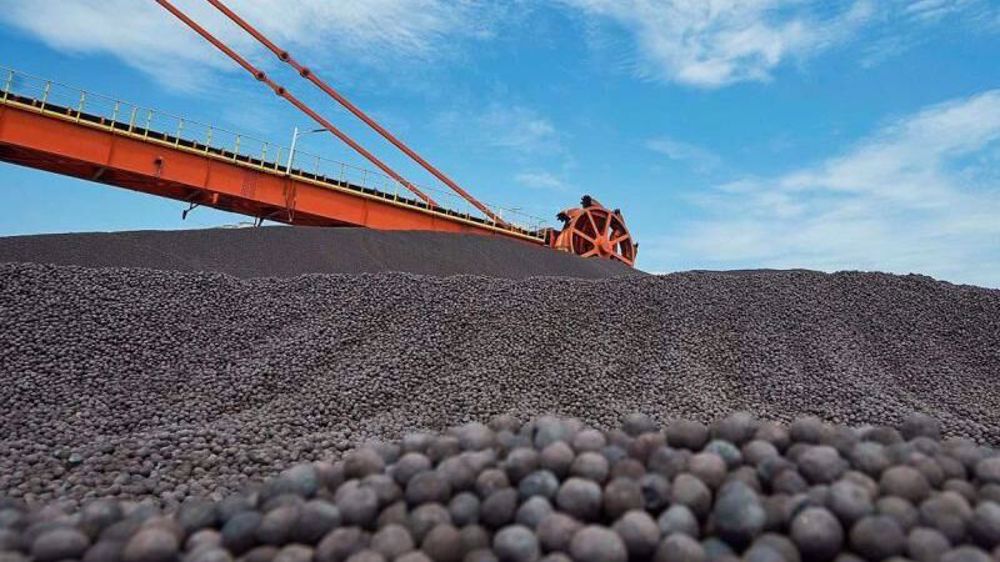
What is a pellet?
A pellet is one of the raw materials used in the production of steel sections, which is made using powder obtained during the extraction process or crushed iron ore. After crushing, iron ore is used in the form of concentrate in the production of pellets. To obtain concentrated iron ore, impurities are removed and its iron content is increased compared to extracted iron ore. The size of these particles must be a maximum of 45 microns.
Concentrated iron ore is mixed with other materials such as lime, cement, milk of lime, organic materials, bentonite and water and is formed into small balls. Therefore, in addition to the price of iron, many other factors will also affect the cost of production and the final price of the product in the market. The use of these compounds has affected the physical and chemical properties of the pellet and has given it special characteristics compared to limestone
Characteristics and physical and chemical properties of the pellet
What we know as the pellet is actually the result of combining iron ore concentrate with additives that have binding properties and cause the following physical and chemical properties in the pellet:
• Increasing the porosity of the pellet
Gal is one of the most widely used raw materials in the blast furnace and is used in the production of steel products by the direct reduction method. Because the components used in the production of the pellet increase the degree of porosity, contact surface and solid contact and increase the reducibility of iron. The porosity of various types of pellets is usually between 25 and 30 percent.
• Reducing the density of iron pellets
One of the effects of the components of the pellet on its physical properties is reducing the density. There is always an inverse relationship between porosity and density. Therefore, as porosity increases, pellet density decreases.
• Slag formation
One of the products of the pelletizing process is slag. Slag is actually a combination of silicates and complex metal oxides that, after cooling, is used in solid form in various applications as road base materials, refractory materials, railway ballast, asphalt and concrete aggregates, etc.
• Facilitation of the pelletizing process
Additives used in pelletizing adjust the metallurgical properties of the pellets and act as a strong adhesive to create pellet pieces.
• Increased pellet strength
In fact, these are compounds such as bentonite that bind the compounds and components used in pelletizing together and provide high strength to the pellets. These pellets exhibit high strength even against thermal stresses in reducing environments.
Types of Pellets
Based on the most common methods of classifying iron pellets, they are divided into the following 4 categories:
Large Pellets: One of the most widely used types of pellets in the cement and steel products manufacturing industry is large pellets, which are produced in various diameters between 20 and 30 mm.
Normal Pellets: In the classification of pellets based on size, types with a diameter of 10 to 15 mm are introduced as normal pellets. Normal pellets are most commonly used in direct reduction units of blast furnaces.
Fine Pellets: The smallest types of pellets with diameters of 3 to 8 mm are used in making slag. This type of iron ball is known in the market as fine pellets.
Sponge Pellets: Sponge pellets have a spherical structure and Iranian steel factories produce them in different sizes. The most common use of this type of pellet can be seen in industries based on scrap metals and casting.
What is a pellet mill?
The pellet mill is one of the most practical products in various industries, which is supplied to the market in the form of grains up to 6 centimeters in size and usually circular. A pellet mill is normally brown; however, there are also black and cream-colored samples on the market, the quality of which is not as good as brown pellets. A pellet mill is widely used in the manufacture of various steel sections. However, pellets can be ground and, after being converted into iron concentrate, subjected to the pelletizing process.
Pellet Application
Depending on the desired chemical properties and some physical properties such as porosity and high strength, various types of pellets are widely used in various industries. The most common use of pellets can be seen in the bridge building industry, automotive industry, aircraft manufacturing, production of various household appliances, bicycle manufacturing, etc. Among the advantages of using pellets in the production of steel sections is a 14% reduction in carbon dioxide and greenhouse gas emissions, which is of great importance to environmentally friendly customers and users.